Choosing the right locks for a commercial property is one of those decisions that seems simple until you start looking at the options. Traditional mechanical locks have been the standard for centuries, and they still work. But smart locks have matured significantly in recent years, and for many businesses, they offer advantages that go well beyond basic access control. This article breaks down the practical differences so you can make an informed decision for your premises.
The Limitations of Traditional Locks
Traditional pin-tumbler and mortice locks are reliable, well-understood, and inexpensive. A good British Standard five-lever mortice deadlock (BS3621) will resist most forced-entry attempts and costs under fifty pounds. There is a reason they have been the default for so long.
But in a commercial setting, traditional locks create specific problems that are easy to overlook until they cause real headaches:
- Key management is a constant burden. Every employee, contractor, and cleaner who needs access requires a physical key. When someone leaves the business or a key goes missing, you face the cost and disruption of changing locks and cutting new keys for everyone else. On a multi-door commercial premises, this gets expensive quickly.
- No audit trail. A traditional lock cannot tell you who opened a door or when. If stock goes missing or an incident occurs outside business hours, you have no access data to work with. You are left relying entirely on CCTV or guesswork.
- No remote control. If a delivery arrives when the building is locked and nobody is on-site, you cannot let them in remotely. If you need to lock down the building urgently, you need to be physically present with a key.
- Vulnerability to picking and bumping. Standard pin-tumbler locks can be picked or bumped by someone with basic tools and a few minutes of practice. Higher-security mechanical locks exist, but they come at a significantly higher cost.
None of these issues are deal-breakers on their own. For a small business with a handful of employees and a single entrance, a good quality deadlock may be perfectly adequate. But as premises grow in size, complexity, or the number of people who need access, the limitations compound.
What Smart Locks Bring to the Table
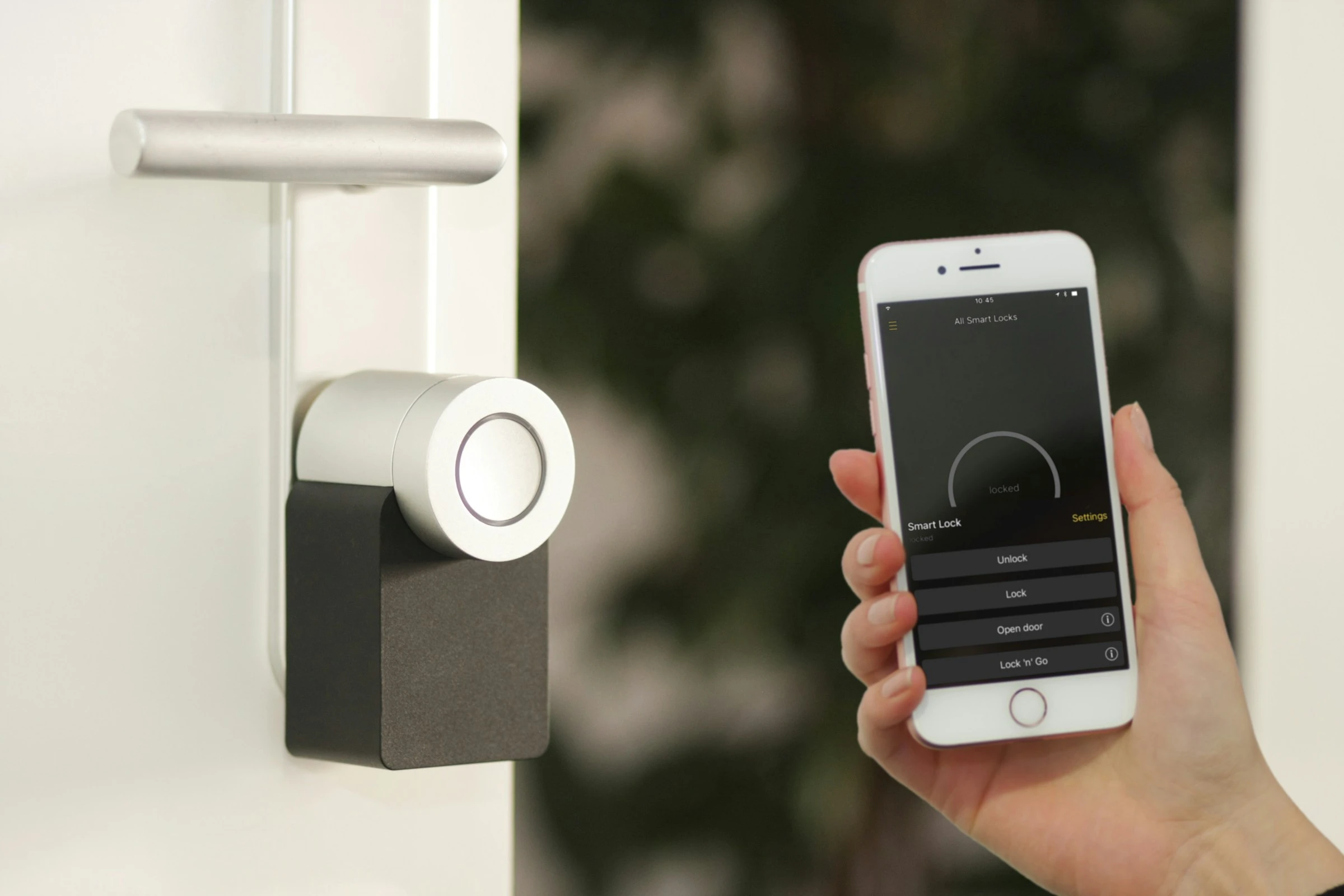
Smart locks replace the mechanical key with electronic credentials. Depending on the system, access can be granted via PIN codes, smartphone apps, key fobs, key cards, or biometric readers. The lock itself connects to a local hub or the internet, giving you a management interface that traditional locks simply cannot offer.
The practical benefits for commercial property include:
- Complete audit trails. Every access event is logged with the identity of the user and the exact time. This is invaluable for security investigations, compliance requirements, and simply knowing who was in the building and when.
- Remote access management. You can grant or revoke access from anywhere with an internet connection. Need to let a contractor in for a one-hour window on a Tuesday afternoon? Create a temporary code that expires automatically. An employee leaves the company? Disable their credentials in seconds, no lock changes needed.
- Temporary and scheduled access. Smart locks let you set access schedules. Cleaning staff might only be able to enter between 6pm and 9pm on weekdays. Weekend access can be restricted to senior management. This level of granularity is impossible with physical keys.
- Instant alerts. Many systems will notify you in real time when a door is opened, when access is denied, or when a lock is tampered with. Combined with an alarm system, this creates a responsive security layer that a traditional lock simply cannot provide.
Types of Smart Locks for Commercial Use
Not all smart locks are created equal, and the commercial market offers several distinct categories:
Keypad locks are the most straightforward. Users enter a PIN code to unlock the door. They are durable, require no smartphone, and work well in environments where staff turnover is high. The downside is that codes can be shared or observed, so regular code changes are advisable.
Bluetooth and app-based locks use a smartphone as the key. They typically offer the best user experience and the most management features, but they require every user to have a compatible phone with the app installed. Battery life and Bluetooth range are practical considerations.
Biometric locks use fingerprints or, in more advanced systems, facial recognition. They eliminate the possibility of lost or shared credentials entirely. However, they tend to be the most expensive option and can be slower to operate. They are best suited to high-security areas within a building rather than main entrance doors with heavy foot traffic.
Key card and fob systems are the traditional choice for larger commercial buildings. Proximity cards or fobs are tapped against a reader. They are fast, reliable, and scalable to buildings with hundreds of doors and thousands of users. The management software for these systems is typically the most mature and feature-rich.
Security Considerations
A common concern with smart locks is whether they are actually as secure as traditional mechanical locks. The honest answer is that it depends on the product.
Cheap consumer-grade smart locks have been shown to have vulnerabilities, from weak Bluetooth encryption to poorly designed apps. But commercial-grade smart locks from established manufacturers are built to a different standard. Look for products that meet relevant security certifications and have been independently tested.
Smart locks do introduce a new category of risk that traditional locks do not have: cyber vulnerability. A mechanical lock cannot be hacked remotely. A smart lock connected to the internet theoretically can be, although in practice, attacks on commercial smart locks are extremely rare. The far more common security failure is still a physical one: a door left propped open, a code written on a sticky note, or a lost key card not reported.
One practical advantage smart locks have over traditional ones is that they tell you when something is wrong. A traditional lock will not alert you if someone is trying to pick it. A smart lock can send you an alert the moment it detects tampering or repeated failed access attempts.
Cost Comparison
Upfront, smart locks are more expensive. A commercial-grade smart lock typically costs between two hundred and eight hundred pounds per door, depending on features and brand, compared to thirty to one hundred pounds for a quality mechanical lock. If you need a networked system with management software, there may also be installation costs and ongoing subscription fees.
However, the total cost of ownership often favours smart locks over a three- to five-year period. Consider the recurring costs that traditional locks generate: locksmith call-outs for lock changes when keys are lost or staff leave, cutting replacement keys, and the indirect cost of having no access data when security incidents occur. For a commercial property with more than a handful of access points and regular staff changes, smart locks can pay for themselves relatively quickly.
When to Choose Each Option
Traditional locks make sense for small premises with few access points and a stable, small team. They are also the right choice for backup security. Most smart locks include a physical key override, and for good reason. If the battery dies or the electronics fail, you need a way in. Power-independent mechanical locks are also appropriate for fire exits and other emergency egress points where electronic failure could create a safety hazard.
Smart locks make sense for commercial properties with multiple access points, frequent staff or contractor changes, compliance requirements for access logging, or any situation where remote management adds genuine value. They are particularly effective for vacant or intermittently occupied properties where you need to grant access to inspectors, agents, or maintenance crews without handing out physical keys.
Integration with Broader Security Systems
Smart locks deliver the most value when they are not operating in isolation. When integrated with an alarm system, a smart lock can automatically arm the alarm when the last person leaves and disarm it when the first authorised person arrives in the morning. Access events from the lock can be correlated with CCTV footage, giving you a complete picture of who entered and what they did.
This kind of integration turns individual security components into a coherent system. A lock, a camera, and an alarm working together are worth considerably more than the sum of their parts. If you are considering upgrading your access control, it is worth thinking about how locks fit into your broader security setup rather than treating them as a standalone decision.
Need Advice on Access Control for Your Property?
We can assess your premises and recommend the right locking and access control solution for your needs.