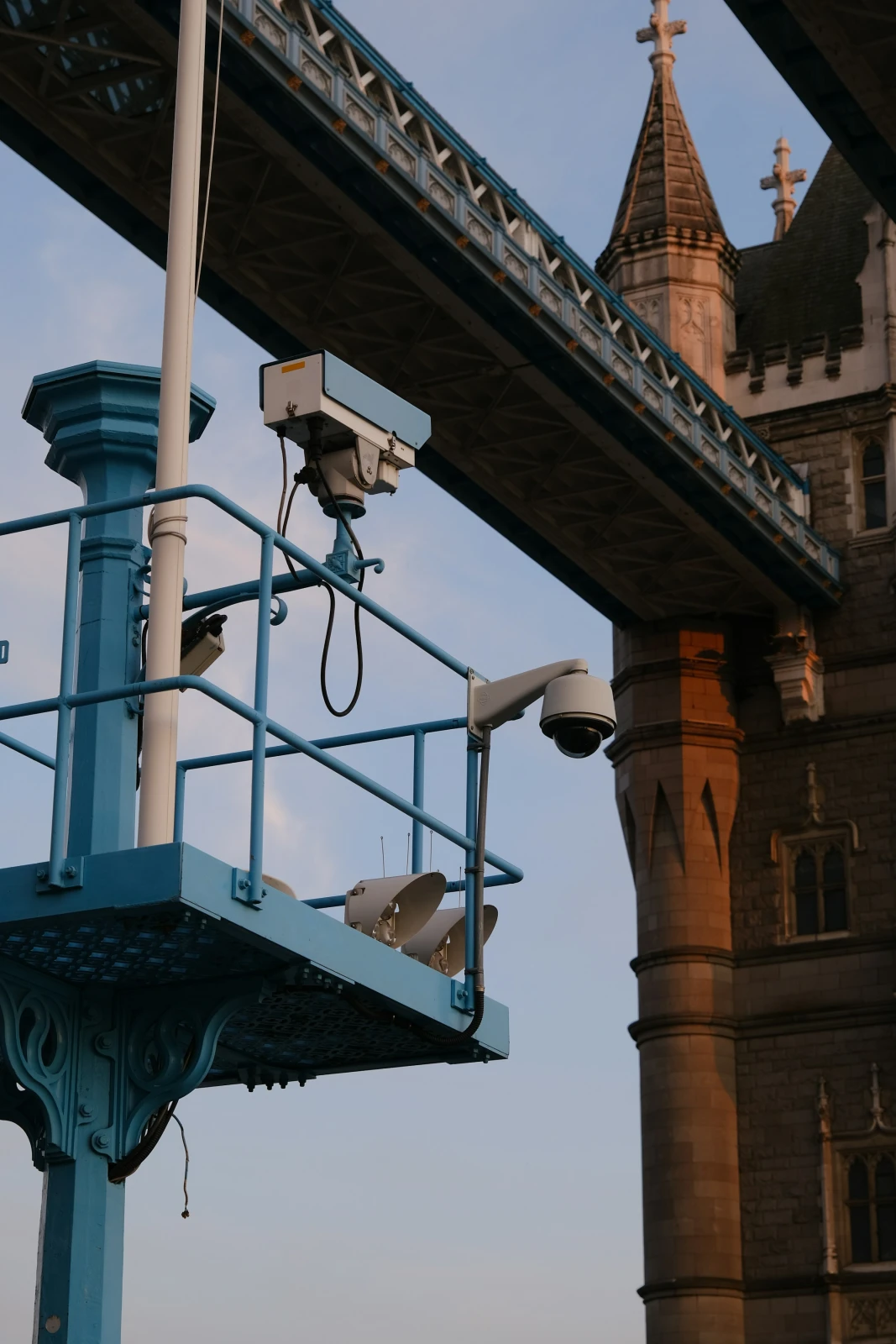
Listed buildings present a unique security challenge. They need protection just as much as any other property, sometimes more so given their heritage value and the irreplaceable nature of their features. But the very regulations that preserve these buildings also restrict what you can do to secure them. Drilling into historic stonework, bolting cameras to a Georgian facade, or fitting modern steel security doors can all require listed building consent and may be refused outright. So how do you protect a listed building without damaging it?
Why Listed Buildings Are Difficult to Secure
England alone has roughly 400,000 listed building entries on the National Heritage List. These range from grand country houses and medieval churches to Victorian warehouses and twentieth-century civic buildings. Each one is protected by law under the Planning (Listed Buildings and Conservation Areas) Act 1990, which makes it a criminal offence to carry out works that affect the character of a listed building without consent.
The restrictions cover both the exterior and interior. Any alteration that would affect the building's special architectural or historic interest requires listed building consent from the local planning authority. In practice, this means that many conventional security installations are either prohibited or require a formal application process that can take weeks or months.
Common restrictions include:
- No drilling or fixing into historic fabric. Mounting brackets for cameras, alarm sensors, or cable runs typically require screws or bolts. On a listed building, drilling into original stonework, brickwork, timber, or plasterwork may be refused.
- No visible external alterations. Security equipment mounted on the exterior of a listed building can be considered visually intrusive and out of keeping with its historic character. This applies to cameras, alarm boxes, lighting, and signage.
- No structural modifications. Fitting steel security doors or shutters, reinforcing window frames, or adding security grilles typically counts as an alteration to the building's character.
- Cable routing restrictions. Even running new cables through a listed building can require consent if it involves chasing into walls, lifting historic floorboards, or penetrating original surfaces.
These restrictions are not arbitrary. They exist to protect irreplaceable heritage. But they create a genuine tension between preservation and protection, particularly when a listed building is vacant and vulnerable.
Non-Invasive Security Solutions
The good news is that modern security technology has evolved to the point where effective protection is possible without making any permanent alterations to a building. The key is using wireless, battery-powered, and freestanding equipment that can be installed and removed without leaving a mark.
Wireless CCTV systems. Battery-powered or solar-powered wireless cameras can be positioned on freestanding poles, tripods, or temporary mounts that do not require any fixing to the building. Modern units connect via 4G, so they work independently of mains power and broadband. They offer the same capabilities as hardwired systems: high-definition recording, night vision, motion detection, and remote viewing via a mobile app. Because nothing is attached to the building fabric, no listed building consent is required.
Battery-powered alarm systems. Wireless intruder detection sensors can be placed on window sills, door frames, and internal surfaces using adhesive pads or freestanding mounts rather than screws. These sensors communicate with a central hub via radio frequency, and the hub connects to a monitoring centre over 4G. The entire system can be installed in hours and removed without trace.
Temporary CCTV masts. For larger listed buildings or heritage sites, temporary deployable CCTV masts provide elevated camera positions without touching the building. These are freestanding units, often on wheeled bases or with ballast weights, that extend to heights of four to six metres. They are commonly used on construction sites and adapt well to heritage settings where permanent installations are not possible.
Portable lighting. Solar-powered security lights with motion activation can deter intruders without any wiring or fixing. Positioned on the ground or on temporary stands, they illuminate access points and vulnerable areas while remaining entirely removable.
Property Guardians in Heritage Buildings
One of the most effective ways to secure a vacant listed building is also one of the least invasive: putting people in it. Property guardians are vetted, DBS-checked individuals who live in a vacant building under a licence agreement. Their presence alone is a powerful deterrent against squatters, vandals, and thieves.
For listed buildings, guardians offer several specific advantages:
- No physical alterations needed. Guardians use the building as it stands. There is no need to install permanent security equipment, which means no consent applications and no risk of damaging historic fabric.
- Building maintenance. An occupied building is a maintained building. Guardians report issues such as leaks, damp, and pest infestations early, before they cause serious damage. For a historic building, early detection of water ingress or structural movement can prevent losses that would be catastrophic and irreversible.
- Heating and ventilation. Listed buildings suffer when they are left empty and unheated. Damp, condensation, and mould can damage plasterwork, timber, and decorative features. Guardians keep the building warm and ventilated simply by living in it, which is genuinely beneficial for the fabric.
- Insurance benefits. Many insurers treat a guardian-occupied building as occupied rather than void, which can significantly reduce premiums and avoid the restrictive conditions that apply to empty property policies.
Guardian schemes work best for listed buildings that have basic utilities in place and are structurally sound. They are typically used for vacancies of three months or more, which covers the period when most listed buildings are at greatest risk: between one use and the next, during planning phases, or while awaiting a buyer or tenant.
Working with the Local Planning Authority
If you do need to install any permanent security measures on a listed building, early engagement with your local planning authority's conservation officer is essential. Conservation officers are not there to obstruct security. They are there to ensure that any works are sympathetic to the building's character.
In practice, listed building consent is more likely to be granted for security measures that are:
- Discreet and positioned to minimise visual impact
- Reversible, so they can be removed without leaving permanent damage
- Proportionate to the security risk, supported by evidence such as a crime prevention survey
- Designed in consultation with a conservation architect or heritage consultant
For Grade II listed buildings, the process is generally more straightforward than for Grade I or Grade II* buildings, where Historic England is consulted on all applications. A crime prevention survey from the local police Designing Out Crime officer can support your case by providing independent evidence of the security risk.
Insurance for Listed Buildings
Insuring a listed building is more complex and more expensive than a standard property. Rebuilding costs are typically much higher because of the need for specialist materials and traditional construction techniques. A standard reinstatement valuation will not reflect the true cost of restoring carved stonework, handmade bricks, lime mortar, or decorative plasterwork to their original condition.
If a listed building is vacant, insurance becomes even more complicated. Most standard policies reduce cover significantly after thirty to forty-five days of vacancy. Specialist void property insurance is available, but insurers will want to see evidence that reasonable security measures are in place. The non-invasive solutions described above, wireless CCTV, battery alarms, and property guardians, all satisfy the security requirements that most specialist insurers set as conditions of cover.
It is worth discussing your security arrangements with your insurer before committing to a particular approach. Some insurers actively prefer guardian occupation over technology-only solutions, while others have specific requirements around monitoring and response times.
Getting the Balance Right
Protecting a listed building requires a different mindset from securing a modern commercial property. The goal is not to turn a heritage building into a fortress. It is to provide proportionate protection that prevents damage, deters unauthorised access, and maintains the building in good condition, all without compromising the features that make it worth protecting in the first place.
The most effective approach usually combines technology and people: wireless CCTV and alarms for detection and deterrence, with property guardians providing the human presence that no amount of technology can fully replicate. Both can be achieved without drilling a single hole or making a single permanent alteration.
Need to Secure a Listed Building?
We specialise in non-invasive security for heritage and listed properties. Talk to us about your building.