Most property owners think about security in terms of individual measures: a camera here, an alarm there, maybe a lock upgrade. But without a written plan that ties everything together, those measures are often incomplete, overlapping, or misaligned with the actual risks. A property security plan is the document that turns ad-hoc decisions into a coherent strategy. It does not need to be complicated, but it does need to exist.
Why You Need a Written Security Plan
A security plan serves three distinct purposes, and each one justifies the time it takes to create.
Insurance requirements. Insurers increasingly expect property owners to demonstrate that they have taken reasonable steps to protect their assets. A written security plan provides that evidence. If you ever need to make a claim, being able to produce a documented plan showing what measures were in place, why they were chosen, and how they were maintained strengthens your position considerably. Conversely, the absence of any documented plan can be used to argue that you failed to exercise due diligence.
Due diligence and liability. Under the Occupiers' Liability Acts of 1957 and 1984, property owners owe a duty of care to visitors and, to a lesser extent, trespassers. If an incident occurs and you face a liability claim, a documented security plan demonstrates that you assessed the risks and took proportionate action. This is particularly important for commercial property owners, landlords with multiple sites, and organisations responsible for buildings open to the public.
Operational clarity. A security plan tells everyone involved what is expected of them. Security staff know their responsibilities. Maintenance teams know which checks to carry out. Management knows what the budget covers and what it does not. Without a plan, security decisions tend to be reactive and inconsistent, driven by whatever the most recent incident happened to be rather than by a considered assessment of risk.
Step 1: Conduct a Risk Assessment
Every security plan starts with understanding what you are protecting against. A risk assessment is a structured way of identifying threats, evaluating their likelihood, and estimating their potential impact.
Location analysis. Start with the property's setting. Is it in a high-crime area? What does the local crime data show? The police publish neighbourhood-level crime statistics that give you a baseline. Consider the surrounding environment: are there natural surveillance opportunities from neighbouring properties, or is the site isolated? What is the lighting like after dark? How accessible is the property from main roads or footpaths?
Property type and characteristics. The type of building matters. A retail unit on a high street faces different threats from a warehouse on an industrial estate or a vacant residential property in a suburban area. Consider the building's construction, the number and type of access points, whether there are valuable materials on-site (copper, lead, equipment), and whether the building is listed or has heritage significance.
History of incidents. What has happened before? If the property or neighbouring properties have experienced break-ins, vandalism, arson, or squatter occupations, those patterns are likely to continue unless the underlying conditions change. Review any incident logs, police reports, or insurance claims related to the site.
Threat identification. Based on the above, list the specific threats the property faces. Common threats include unauthorised access, theft, vandalism, arson, squatting, fly-tipping, and anti-social behaviour. For some properties, the list might also include protest activity, cyber-physical attacks on building management systems, or environmental hazards like flooding.
For each threat, assess the likelihood (high, medium, low) and the potential impact (severe, moderate, minor). This gives you a simple risk matrix that helps prioritise where to focus your resources. A high-likelihood, severe-impact risk demands immediate attention. A low-likelihood, minor-impact risk may only need monitoring.
Step 2: Define Security Objectives
With the risk assessment complete, set clear objectives for what the security plan needs to achieve. Objectives should be specific and measurable where possible.
Good security objectives might include: prevent unauthorised access to the building and site perimeter; detect and respond to intrusions within 60 minutes; maintain compliance with insurance policy security requirements; reduce the risk of fire through regular inspections and monitored alarm systems; ensure all access points are secured and checked on a defined schedule.
Avoid vague objectives like "improve security" or "keep the property safe." These give you nothing to measure against and no way of knowing whether the plan is working. Each objective should relate directly to one or more of the risks identified in Step 1.
Step 3: Choose Security Measures
Security measures fall into three categories: physical, technological, and people-based. An effective plan typically draws from all three.
Physical measures are the passive barriers that control access and deter opportunistic intruders. These include perimeter fencing, gates, locks, steel security screens on windows and doors, anti-climb paint, security lighting, and barriers. Physical measures are the foundation of any security plan because they work around the clock without ongoing operational cost. Their limitation is that they can be overcome given enough time and determination.
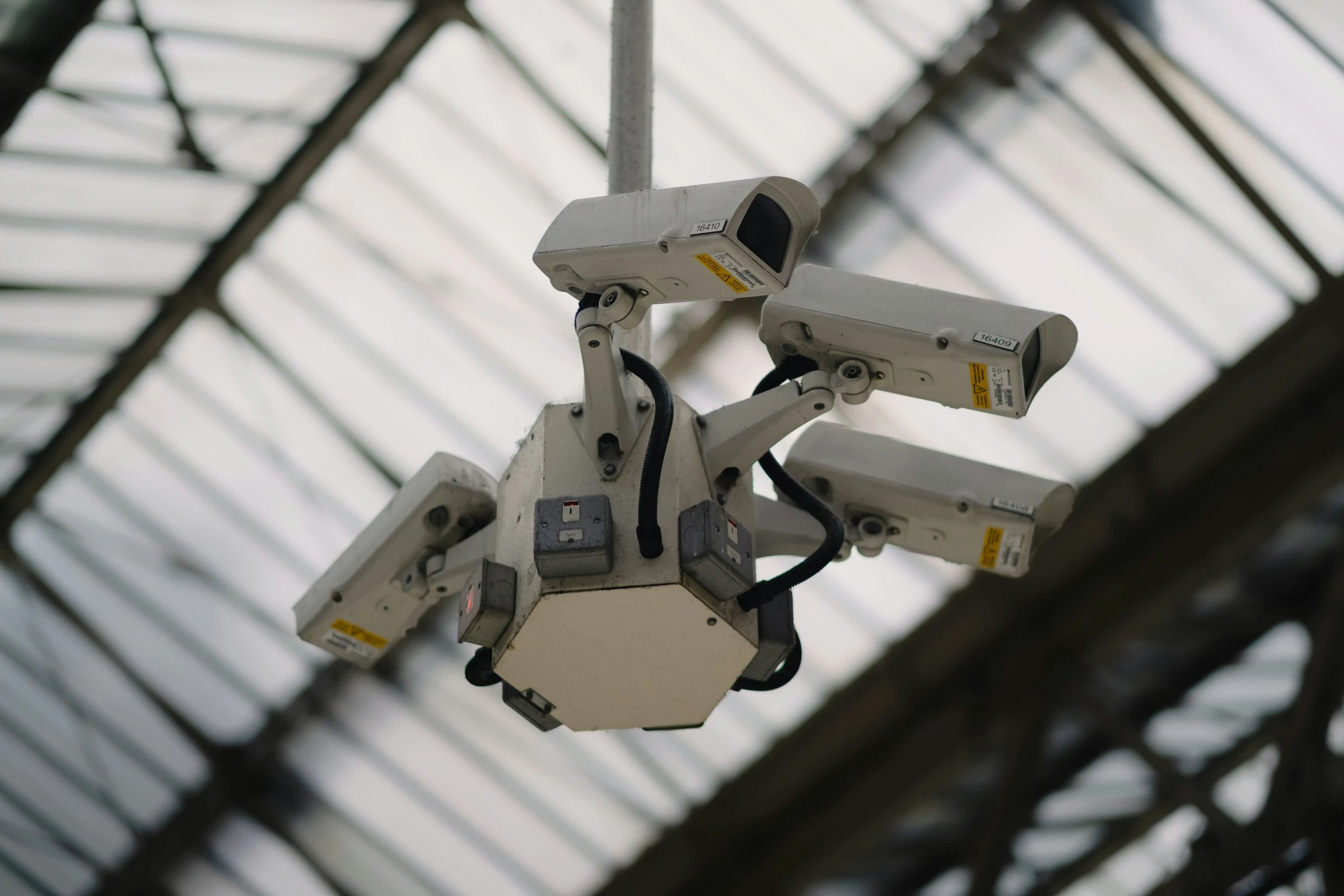
Technological measures provide detection, verification, and evidence. CCTV systems with remote monitoring allow real-time visual verification of events. Intruder alarm systems with 24/7 monitoring provide immediate notification of unauthorised access. Access control systems manage and record who enters the property and when. Fire detection and suppression systems protect against one of the most destructive risks to any building. The strength of technology is its ability to alert you to problems as they happen, rather than after the damage is done.
People-based measures provide the human element that physical and technological measures cannot. Security guards, whether static or on mobile patrol, provide a visible deterrent, an on-site response capability, and the judgment to handle unpredictable situations. Property guardians provide 24/7 occupation of vacant buildings, combining security with the practical benefit of keeping the property maintained and heated. Key holders provide alarm response without the cost of permanent on-site presence.
The right combination depends on the risk profile established in Step 1 and the objectives set in Step 2. A low-risk property might need only physical measures and an alarm system. A high-risk vacant building might need CCTV, patrols, and guardians. Match the measures to the risk, not to a generic checklist.
Step 4: Assign Responsibilities
A security plan that does not specify who does what is a plan that will not be followed. For each measure in the plan, assign clear responsibility.
Who is responsible for daily lock-up and opening procedures? Who monitors the CCTV feeds and responds to alerts? Who carries out weekly site inspections, and who do they report to? If an alarm activates at 2am, who is the first point of contact, and what is the escalation procedure? Who maintains the alarm system and arranges annual servicing? Who reviews the security plan and how often?
Document contact details, out-of-hours numbers, and escalation chains. If you use external security providers, include their contract details, response time commitments, and the scope of their responsibilities. Make sure everyone named in the plan has a copy of the relevant sections and understands their role.
Step 5: Set a Budget and Timeline
Security costs money, and the plan needs to acknowledge that honestly. Set out the capital costs (one-off purchases like CCTV installation, lock upgrades, fencing) separately from ongoing costs (monitoring fees, patrol charges, guardian fees, maintenance contracts, insurance).
Prioritise spending against the risk assessment. Spend the most on mitigating the highest risks. If the budget is limited, it is better to address the top two or three risks thoroughly than to spread resources thinly across everything.
Include a timeline for implementation. Some measures can be put in place immediately (changing locks, arranging key holding). Others may take weeks (installing CCTV, erecting fencing) or require coordination with contractors and service providers. A phased implementation plan ensures that the most critical measures are in place first.
Step 6: Establish a Review Schedule
A security plan is not a one-time document. Risks change, circumstances change, and measures that were appropriate six months ago may no longer be sufficient. Build a review schedule into the plan.
As a minimum, review the plan annually. Review it immediately after any security incident, as incidents often reveal gaps that were not apparent before. Review it when the property's circumstances change, for example when a building becomes vacant, when construction work begins, or when a new tenant moves in.
Each review should reassess the risk environment, evaluate whether current measures are working, check that all responsibilities are being fulfilled, and update the plan accordingly. Document the review findings and any changes made.
Template Outline: Property Security Plan
Use this outline as a starting point for your own plan. Adapt it to suit the property and the level of detail required.
- 1. Property details. Address, property type, current use/status, key contacts, insurance policy reference.
- 2. Risk assessment. Location analysis, property characteristics, incident history, identified threats, risk matrix (likelihood vs impact).
- 3. Security objectives. Specific, measurable goals linked to identified risks.
- 4. Security measures. Physical measures in place, technological systems (CCTV, alarms, access control), people-based measures (guards, guardians, key holding, patrols).
- 5. Roles and responsibilities. Named individuals or organisations, contact details, out-of-hours procedures, escalation chain.
- 6. Budget. Capital costs, ongoing costs, payment schedule.
- 7. Implementation timeline. Phased plan with dates and milestones.
- 8. Inspection and maintenance schedule. Frequency of site inspections, equipment servicing dates, checklist templates.
- 9. Incident response procedure. What to do in the event of a break-in, fire, flood, or other security event.
- 10. Review schedule. Dates for planned reviews, triggers for unscheduled reviews, record of past reviews and changes.
The plan does not need to be lengthy. For a single property, a well-structured document of five to ten pages is usually sufficient. What matters is that it is accurate, current, and accessible to everyone who needs it. A plan that sits in a drawer unread is no better than having no plan at all.
If you are unsure where to start or want a professional assessment of your property's security needs, an experienced security provider can help you build a plan that is proportionate to the risks and realistic within your budget.
Need Help With Your Security Plan?
We carry out professional site assessments and help property owners build effective security plans. Get in touch for a free consultation.